Functional Safety
Functional safety ensures that electrical and electronic systems in battery applications operate without posing unreasonable risks, even during failures, by adhering to rigorous standards and processes like ISO 26262.
Functional safety is defined as the absence of unreasonable risk due to hazards caused by malfunctioning behavior of electrical and electronic systems. In the battery industry, this is critical for applications such as electric vehicles (EVs) and energy storage, where failures can lead to severe outcomes like thermal runaway, fires, or explosions, emphasizing the need for robust safety measures from design to deployment.
Understanding Functional Safety in Battery Contexts
For professionals in the battery sector, functional safety is not merely a compliance checkbox but a foundational element that underpins product reliability and user trust. Battery systems, with their high energy densities and complex electronics, require meticulous attention to prevent malfunctions that could harm people, property, or the environment. This involves integrating safety principles into every stage of the product lifecycle, from concept and development to operation and decommissioning.
Core Principles and Their Application
At its heart, functional safety relies on principles like hazard analysis, risk assessment, and the implementation of safety mechanisms. In battery design, this means identifying potential failure modes—such as overvoltage, overtemperature, or short circuits—and designing systems to mitigate them. For instance, a Battery Management System (BMS) must be engineered to detect anomalies and initiate protective actions, ensuring that even if a component fails, the system remains safe.
Link to Overall System Safety
Functional safety complements other safety aspects, such as mechanical and chemical safety, by focusing on the correct operation of electronic controls. In EVs, this integration is vital, as a fault in the BMS could cascade into broader system failures, highlighting why professionals must adopt a holistic approach that aligns with industry best practices and regulatory frameworks.
Key Standards and Regulations for Battery Systems
Adherence to international standards is essential for achieving and demonstrating functional safety in battery applications. ISO 26262, the automotive functional safety standard, is particularly relevant, providing a structured framework for hazard analysis, risk assessment, and the definition of Automotive Safety Integrity Levels (ASIL). This standard guides battery manufacturers and OEMs in developing systems that meet stringent safety requirements, especially for high-risk components like lithium-ion batteries.
ISO 26262 and ASIL Determination
ISO 26262 requires a systematic process to assign ASIL levels (A to D) based on the severity, exposure, and controllability of potential hazards. For battery systems, this often results in ASIL C or D requirements for critical functions, such as cell voltage monitoring or thermal management, necessitating rigorous design, testing, and documentation to ensure compliance and reduce liability risks.
Other Relevant Standards and Their Impact
Beyond ISO 26262, standards like IEC 61508 (for general E/E systems) and region-specific regulations (e.g., UN ECE R100 for EVs) play a role. Battery professionals must navigate these frameworks to address diverse applications, from automotive to stationary storage, ensuring that safety measures are tailored to the specific operational context and hazards involved.
Implementation Strategies for Battery Professionals
Implementing functional safety in battery projects involves a phased approach that starts with concept development and extends through validation. Key steps include conducting hazard and risk assessments (HARA), defining safety goals, and selecting appropriate technologies and architectures. For example, in BMS development, this might involve using redundant sensors or fault-tolerant designs to achieve the required ASIL, while maintaining performance and cost efficiency.
Safety Goal Definition and ASIL Integration
Safety goals are specific, measurable targets derived from hazard analysis, such as preventing thermal runaway or overcurrent conditions. In practice, these goals are broken down into technical safety requirements that guide hardware and software development. For battery systems, this often involves collaboration between electrical engineers, software developers, and safety experts to ensure that all aspects—from cell chemistry to system integration—are aligned with safety objectives.
Testing, Validation, and Documentation
Rigorous testing is crucial to verify that safety mechanisms function as intended under various conditions. This includes methods like simulation, hardware-in-the-loop (HIL) testing, and environmental stress tests to validate performance against standards. Documentation, such as safety cases and compliance reports, provides auditable evidence and is essential for certification, helping companies demonstrate due diligence and streamline market entry.
Challenges and Best Practices in the Battery Industry
Professionals in the battery field face unique challenges, including rapid technological advancements, cost constraints, and supply chain complexities. Integrating functional safety can be resource-intensive, but adopting best practices—such as early safety planning and cross-functional teamwork—can mitigate risks and enhance product robustness. For instance, involving safety experts from the outset helps identify potential issues before they become costly redesigns.
Common Pitfalls and How to Avoid Them
Common mistakes include underestimating the complexity of failure modes, inadequate testing coverage, and poor documentation management. In battery applications, a typical pitfall is neglecting secondary hazards, like electromagnetic interference affecting BMS performance. To avoid this, companies should implement continuous risk monitoring and use tools like Failure Mode and Effects Analysis (FMEA) to proactively address vulnerabilities.
Strategies for Continuous Improvement
Best practices emphasize a culture of safety, with regular training, audits, and lessons-learned sessions. Leveraging automation for tasks like code analysis or test execution can improve efficiency, while staying updated on evolving standards ensures long-term compliance. For battery manufacturers, this proactive approach not only safeguards against incidents but also builds competitive advantage by fostering innovation within safe parameters.
Conclusion
Functional safety is a cornerstone of responsible battery technology development, enabling the industry to harness high-energy systems while minimizing risks. By embracing standards, systematic implementation, and collaborative practices, professionals can drive innovation safely, ensuring that products like EVs and grid storage solutions meet the highest safety benchmarks and gain user confidence in a competitive market.
How PEM Motion Enhances Functional Safety in Battery Projects
PEM Motion, as an international engineering and consulting partner, offers specialized support to battery manufacturers, component suppliers, OEMs, and EV producers in achieving functional safety excellence. With core expertise in Battery Testing & Compliance, BMS Solutions, Training, and Operations Support, PEM Motion assists clients in navigating complex requirements, such as developing testing procedures, managing documentation, and ensuring compliance with standards like ISO 26262. Their tailored services help reduce development cycles, mitigate risks, and enhance product reliability, empowering companies to focus on innovation while meeting global safety demands effectively.
Get practical steps for your battery project
Tell us about your goals and constraints and we will map your next steps.



Our Focus
What we do
Battery
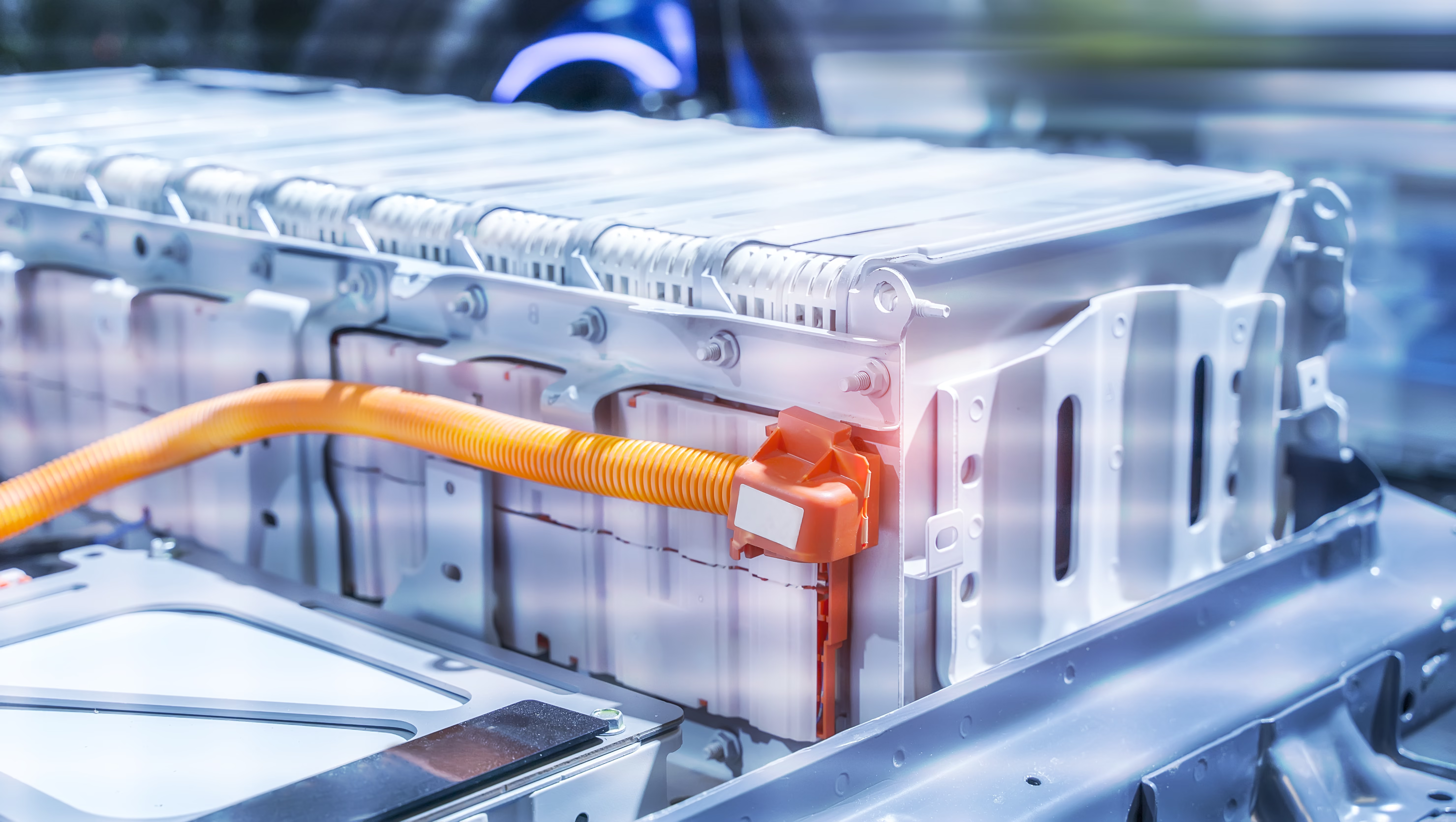
From battery technology assessment to industrialized production: engineering, validation and manufacturing solutions across the entire battery value chain.

E-Motor
Engineering efficient, scalable and cost-competitive electric drive solutions from concept to production.
Fuel Cell
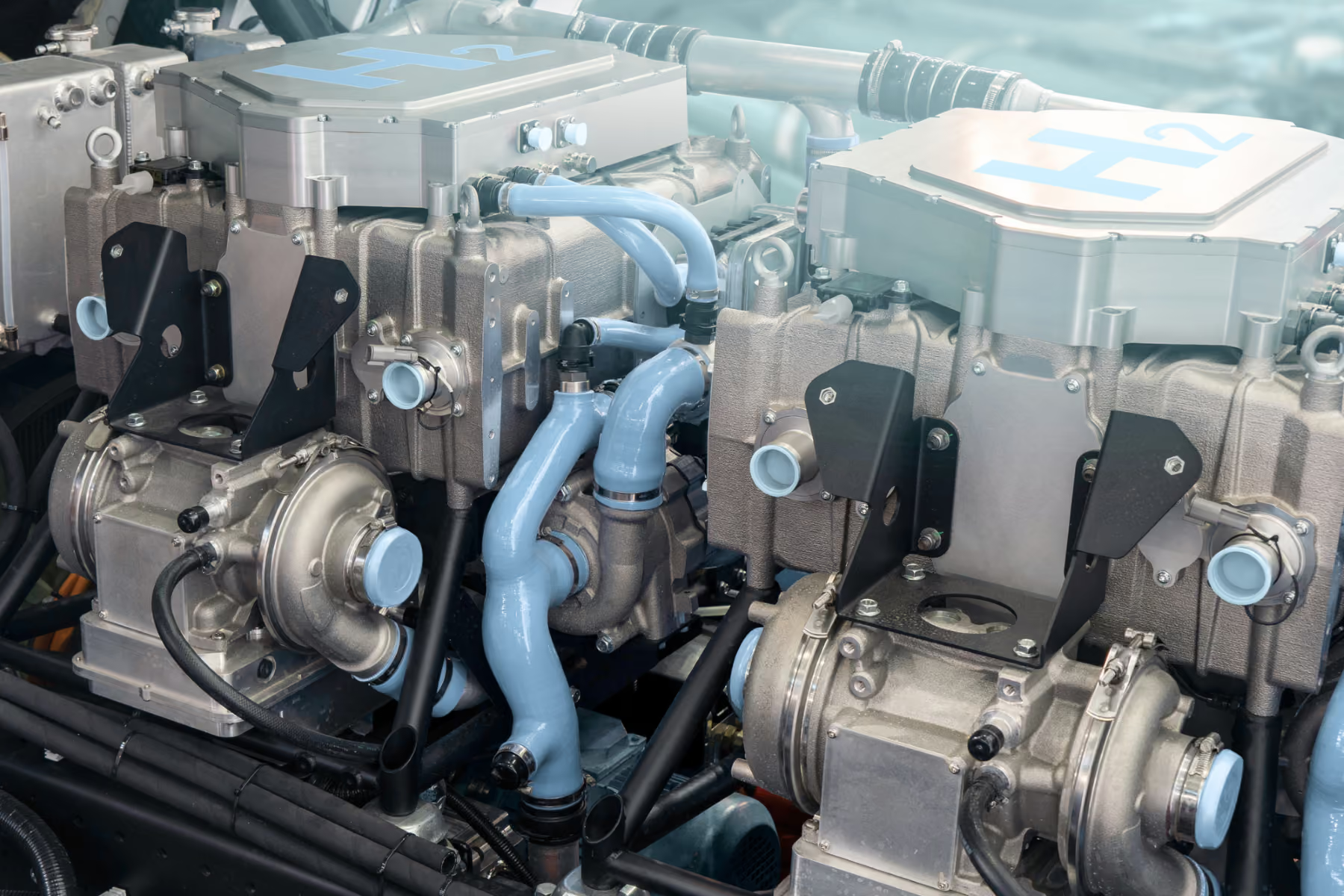
Enabling the hydrogen economy through fuel cell and electrolyzer engineering, validation and industrialization.
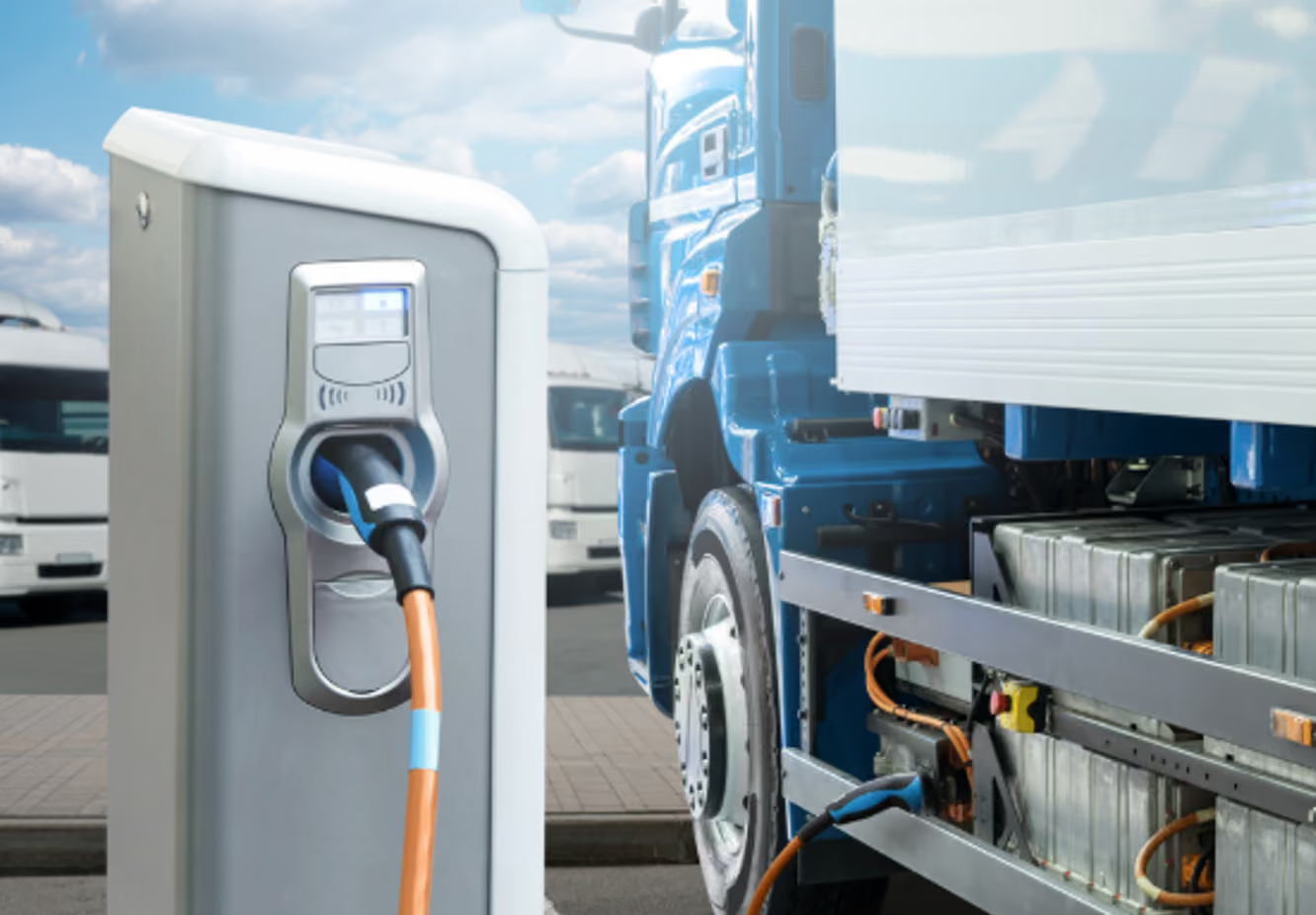
Heavy-Duty & Off-Highway Vehicles
Delivering electrified heavy-duty and off-highway vehicles through system integration, validation and industrial implementation.